Key Takeaways
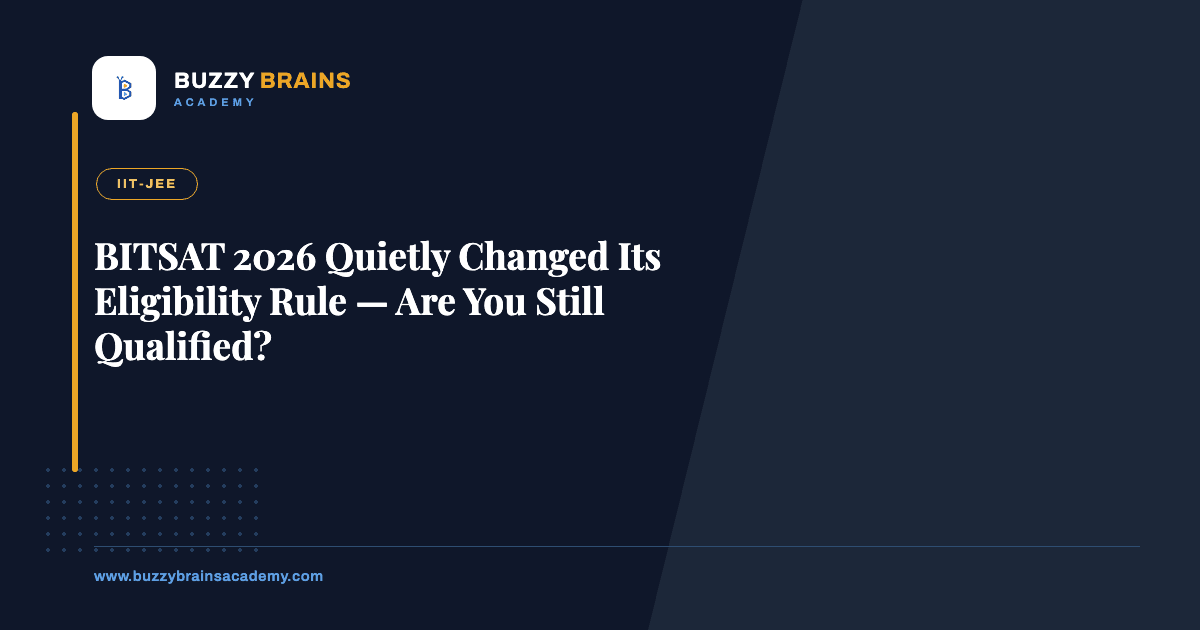
- BITSAT 2026 removed the clause allowing candidates who retook their complete Class 12 examination in a later year to apply — this is a genuine, meaningful tightening of eligibility.
- Under the revised criteria, only students who appeared for Class 12 for the first time in 2025 or 2026 are eligible for BITSAT 2026.
- A narrower exception remains for subject-wise improvement: a 2025 Class 12 passout retaking specific subjects for improvement (not the full exam) may still be eligible, but full repeaters from 2024 or earlier are not.
- Minimum marks requirements remain unchanged: 75% aggregate in Physics, Chemistry, and Mathematics/Biology, with at least 60% in each subject individually.
- Students affected by this change should verify their specific eligibility status directly against the official BITSAT 2026 information bulletin before assuming they qualify.
What the Old Rule Allowed
Previously, BITSAT eligibility included a clause permitting candidates who retook their complete Class 12 board examination in a later year — for reasons ranging from a poor first attempt to a gap year — to still apply, provided they met the marks and subject requirements. This gave a meaningful path back into BITSAT eligibility for students who had a genuinely difficult first Class 12 attempt and used a full repeat to improve their standing.
What Changed and Who It Affects
The revised BITSAT 2026 criteria remove that path entirely: only students who appeared for Class 12 for the first time in 2025 or 2026 are eligible. This directly affects any student who completed a full Class 12 repeat in 2024 or earlier and was planning to use that improved result for a BITSAT 2026 application — under the new rule, that pathway is no longer available, regardless of the improved marks achieved.
The Narrower Subject-Wise Improvement Exception
It's worth being precise about what's still allowed: a student who passed Class 12 for the first time in 2025 and later takes subject-wise improvement exams (retaking specific subjects, not the entire Class 12 examination) may still remain eligible for BITSAT 2026, since this is treated differently from a full repeat. This is a meaningfully narrower allowance than the old full-reattempt clause, and students in this specific situation should confirm their exact eligibility status against the official bulletin rather than assuming either full eligibility or full disqualification.
Got a question about this?
Talk to an IIT-JEE Program mentor directly — no form, just a quick WhatsApp chat.
A Quick Eligibility Comparison
| Student Situation | BITSAT 2026 Eligibility |
|---|---|
| First-time Class 12 appearance in 2025 or 2026 | Eligible (subject to marks criteria) |
| 2025 passout doing subject-wise improvement (specific subjects only) | May remain eligible — confirm against official bulletin |
| Full Class 12 repeat completed in 2024 or earlier | No longer eligible under the revised criteria |
| Meets marks criteria but outside the eligible passing years above | Not eligible regardless of marks achieved |
Common Mistakes to Avoid
- Assuming the old full-reattempt eligibility rule still applies and planning a BITSAT application around it without checking the revised 2026 criteria.
- Confusing subject-wise improvement with a full Class 12 repeat — these are treated differently under the revised eligibility rule, and the distinction genuinely matters.
- Not verifying eligibility directly against the official BITSAT 2026 information bulletin, especially for any student whose situation doesn't clearly fit a standard case.
- Discovering ineligibility late in the preparation cycle — checking this specific rule early avoids investing months of preparation into an application that may not be accepted.
Expert Tips from BuzzyBrains Academy Faculty
Founder Dilip Sah (IIT Kanpur alumnus, JEE AIR 400, 25+ years of mentoring experience), alongside Agarwal Sir (PhD, IIT Bombay), review each student's specific eligibility situation before committing to BITSAT preparation:
- Every student's eligibility is checked against the current-year BITSAT criteria specifically, rather than assumed to match a previous year's rules.
- Students in ambiguous situations (subject-wise improvement, unusual Class 12 timelines) are guided to confirm directly against the official bulletin before BITSAT becomes a core part of their preparation plan.
- Small batches (max 12 students) let mentors catch an eligibility mismatch early, before significant preparation time is invested in an exam a student may not be able to appear for.